

Freshly cooked rice has a short window where it tastes perfect. The grains are warm, moist, tender, and fluffy. After that, quality can decline quickly. Rice may dry out on the surface, become firm around the edges, clump together, or lose the soft texture customers expect.
For foodservice kitchens, catering operations, lunch programs, prepared meal brands, and busy households, this is a common problem. Rice often needs to stay soft for several hours after cooking, not just for the first few minutes.
The good news is that rice can stay soft much longer when moisture, heat, storage, and reheating are managed correctly. Whether you use a rice cooker keep warm setting, a commercial warmer, an insulated container, or refrigerated cooked rice storage, the goal is the same: protect the moisture inside the grains while keeping the rice safe and pleasant to eat.
For a broader look at rice texture issues, including dry rice, mushy rice, sticky rice, storage problems, and reheating, see our complete guide: Rice Problems & Fixes: The Complete Guide to Better Rice Every Time.
Why Rice Becomes Dry or Hard After Cooking
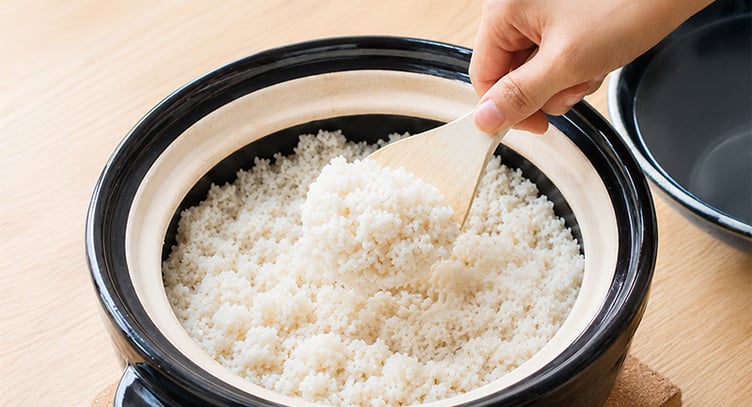
Rice becomes hard because its texture continues to change after cooking. Even when the rice is fully cooked, the grains are still losing steam and heat. As moisture leaves the surface, the outside of the rice begins to dry.
Cooling also changes the starch inside the rice. As cooked rice cools, starch molecules gradually firm up. This process is one reason rice can feel harder after sitting for a few hours.
This is also why rice gets hard in the fridge. Refrigeration is useful for food safety, but cold temperatures make rice starch firm up faster. Rice that was soft after cooking can feel dry and stiff the next day, especially if it was stored without enough protection from air.
The most common causes of hard rice after cooking are:
- Uncovered rice sitting too long
- Too much air exposure
- Dry heat during holding
- Overholding in a rice cooker
- Poorly sealed storage containers
- Reheating without added moisture
Once you understand why rice gets hard, it becomes much easier to prevent it.
Warm Holding in Rice Cookers and Commercial Warmers
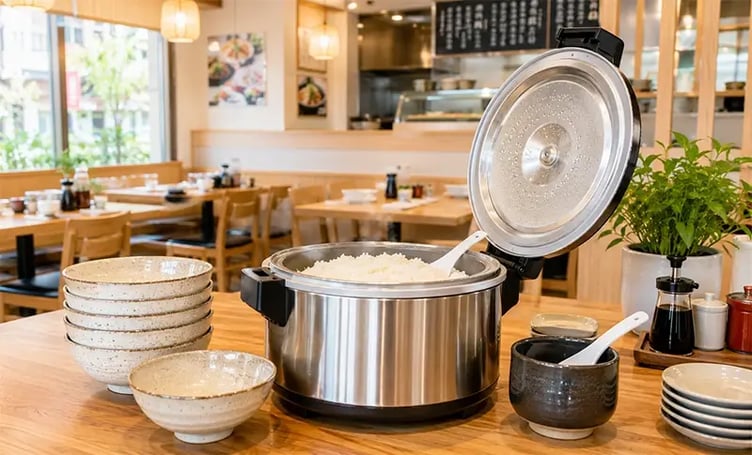
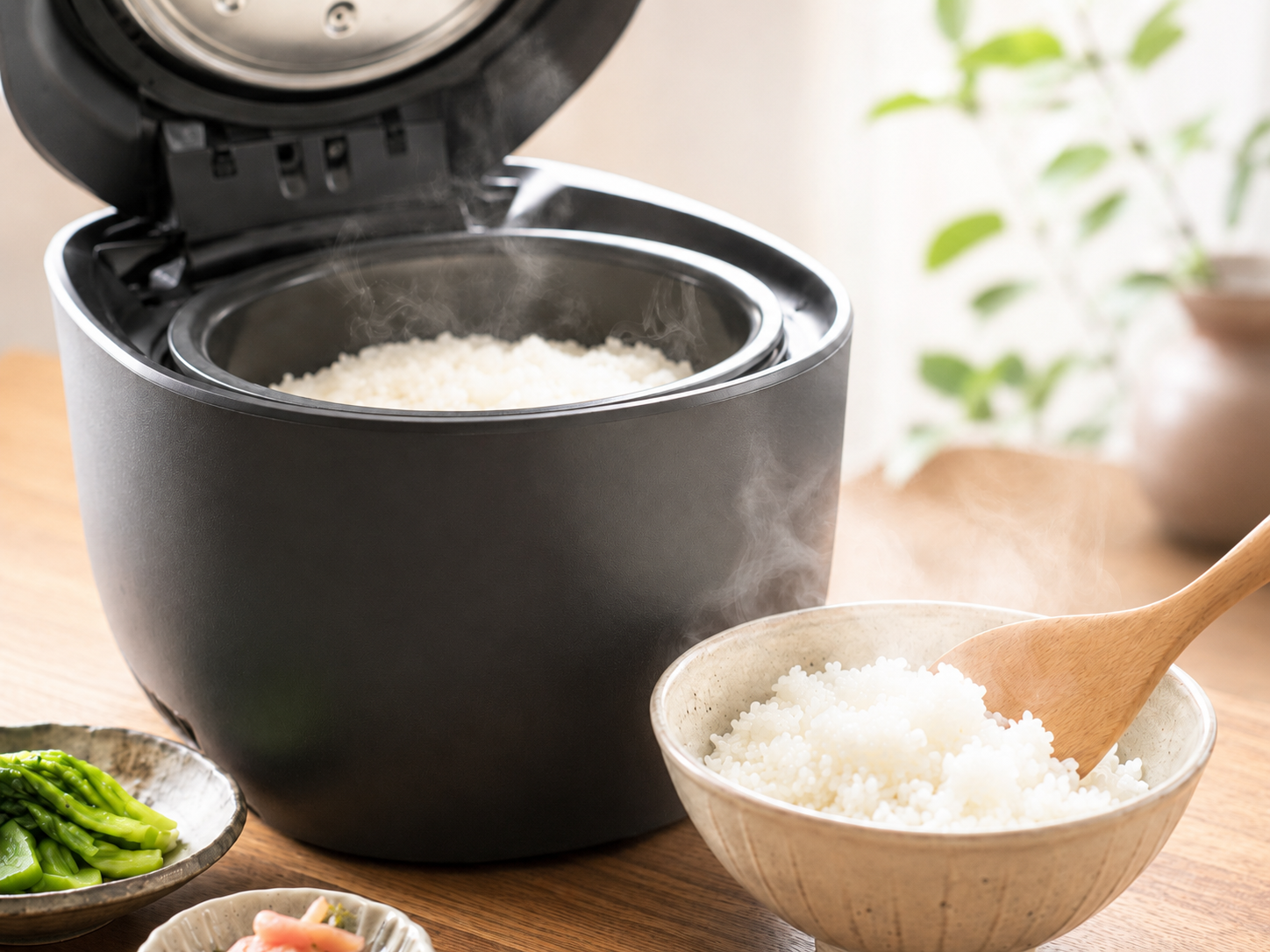
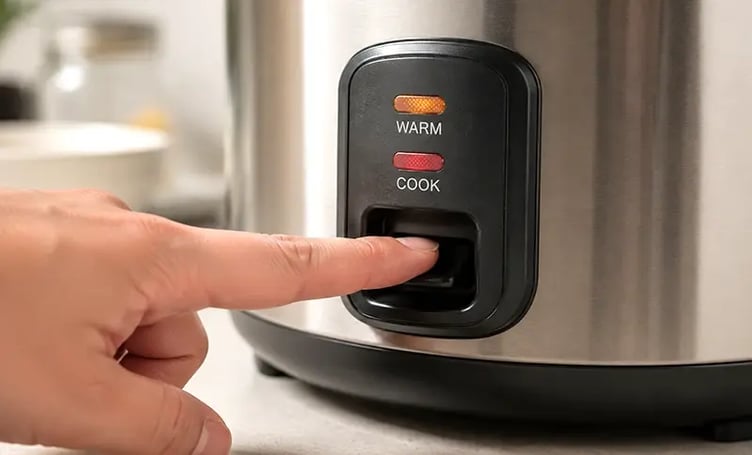
A rice cooker is one of the easiest tools for keeping rice warm. Most models switch automatically from cooking mode to keep warm mode once the rice is finished.
This is convenient, but the rice cooker keep warm function should still be managed carefully. Rice can dry out if it stays in the cooker too long, if the lid is opened often, or if the bottom layer is exposed to direct heat for an extended period.
For better results, let the rice finish steaming before opening the lid. Then fluff it gently once to release excess steam and separate the grains. After that, keep the lid closed as much as possible.
Opening the lid repeatedly allows steam to escape. Stirring too often can also damage the grains and make the texture uneven. The top may dry out while the bottom becomes dense or sticky.
For foodservice operations, commercial rice warmers are often more reliable than standard rice cookers for longer holding periods. They are designed to maintain warm rice for service while reducing moisture loss.
Temperature Standards: Why those numbers?
Most standard rice cookers keep rice at a temperature between 60°C and 74°C (approx. 140°F to 165°F).
Standard/High Warm Mode (70°C – 74°C): This is the default setting for most cookers. Keeping the temperature above 70°C is crucial to prevent the growth of harmful bacteria, such as Bacillus cereus, which can cause food poisoning if the rice drops below 60°C.
Low Warm Mode (60°C – 65°C): Some high-end cookers offer a "Extended/Low Warm" mode. It keeps the temperature slightly lower to prevent the rice from drying out too quickly, but it uses specialized sensors to ensure it stays well within the safe zone.
⚠️ Note: If the temperature is too low (below 60°C), bacteria multiply rapidly. If it's kept too high for too long, the rice will turn yellow (due to the Maillard reaction) and develop an unpleasant, stale odor.
Time Limits: How long is too long?
How long you can keep rice warm depends heavily on your rice cooker's model and technology.
| Type of Rice Cooker | Peak Freshness Window | Maximum Recommended Time |
|---|---|---|
| Standard Cookers Conventional / Basic IH |
Up to 5–6 hours | Up to 12 hours (Half a day) |
| Premium Cookers Pressure IH, Vacuum, or Steam |
Up to 12–24 hours | Up to 24–40 hours |
Regardless of how advanced your cooker is, keeping rice on "Keep Warm" for more than 24 hours is generally not recommended, as it will lose its moisture, become dry, and lose its flavor.
Moisture Control During Service
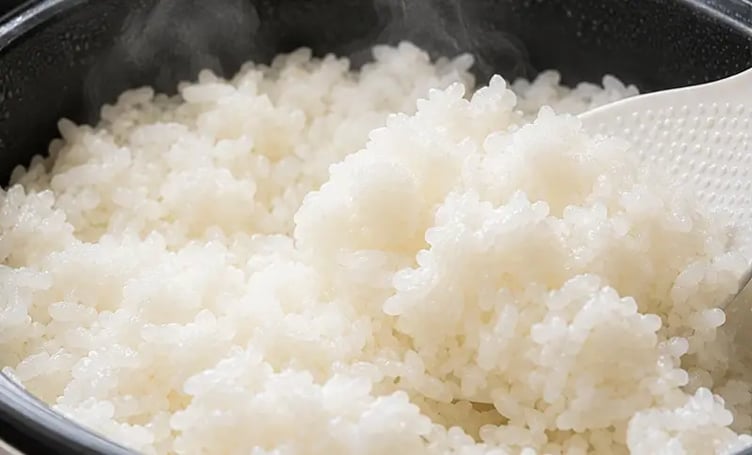
Moisture control is the most important factor in keeping rice soft. The goal is not to make the rice wet. The goal is to prevent the surface from drying while preserving a clean, fluffy texture.
During service, rice should be covered whenever possible. In buffet or party settings, smaller refill batches usually perform better than one large tray. Smaller batches spend less time exposed to air and are easier to refresh.
For catering, rice should be transferred to insulated carriers or covered warmers soon after cooking. Leaving rice in a wide, shallow pan for too long increases surface drying.
For rice held in a cooker or warmer, avoid scraping the rice repeatedly from the bottom. This can create a dry, compacted layer. Instead, gently fold the rice when needed and serve from areas that are still moist and fluffy.
A small amount of steam can help maintain softness, but too much trapped condensation can make rice soggy. The best result comes from balance: covered, warm, lightly humid, and not overmixed.
Safe Timing: Warm Holding vs. Storage
There is an important difference between keeping rice warm for service and storing rice for later.
Warm rice should be kept hot enough for safe holding. If rice is no longer being held hot, it should be cooled and refrigerated promptly. Cooked rice should not be left at room temperature for long periods.
For foodservice teams, rice handling should follow local food safety rules and internal procedures. Large batches need special care because they cool slowly. A deep container of hot rice can stay warm in the center for a long time, which may create safety risks if cooling is not controlled.
For overnight use, rice should not be left in a cooker, pot, or container at room temperature. The better method is to cool it quickly, store it in airtight containers, and reheat it with added moisture the next day.
In other words, warm holding is for active service. Storage is for later use.
Cooked Rice Storage for Later Use: The Japanese Portion-and-Freeze Method
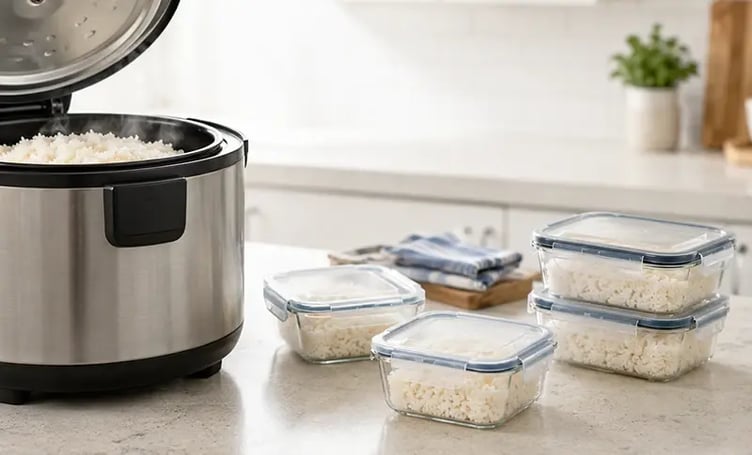
In many Japanese households, cooked rice is cooled and stored soon after it finishes cooking, especially if it will not be eaten the same day.
The rice is usually divided while it is still warm, often into single-serving portions. Each portion is placed on plastic wrap or into a small airtight container. The rice is spread slightly so it is not too thick, which helps it cool more evenly.
The rice is then wrapped or covered tightly while it is still warm. This is important because the steam helps keep moisture inside the rice. If the rice is left uncovered while cooling, the surface can dry out and become hard.
After wrapping, the portions are left at room temperature for a short time until they are no longer too hot. Once the steam has settled and the rice has cooled slightly, the portions are placed in the freezer.
When needed, the rice is reheated directly from frozen in the microwave. Because it was wrapped while still warm and moist, it reheats with a softer, fluffier texture than rice that was left uncovered or stored in the refrigerator.
How Rice Handling Differs in Food Service
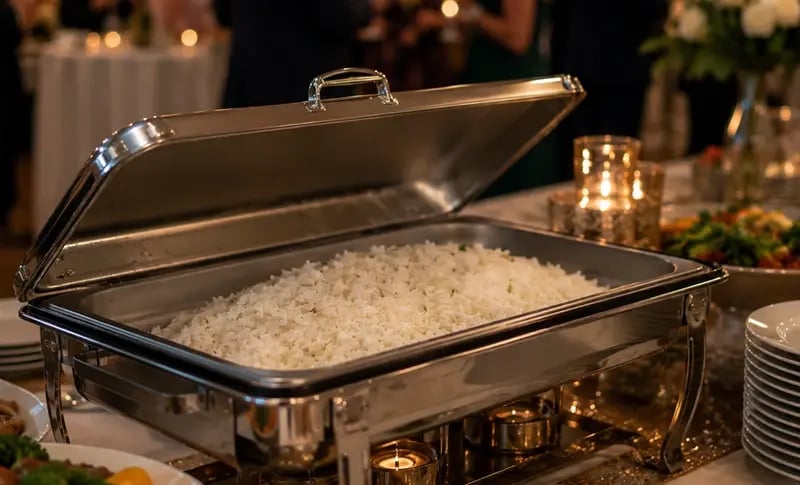
In the U.S. food service industry, rice handling is more complex and regulated than household storage, with stricter controls around time, temperature, storage, and reheating. Restaurants and commercial kitchens need to manage rice for texture, speed of service, and food safety.
Rice that will be served soon is often kept hot in a warmer or holding unit. Rice that will be used later should be cooled quickly, divided into smaller batches, and stored cold to reduce food safety risks.
Because cooked rice can dry out or become unsafe if handled poorly, commercial kitchens focus on the right holding method for each situation: hot holding for immediate service, and rapid cooling, cold storage, and proper reheating for later service.
Reheating Rice Without Dryness
Reheating is where many rice texture problems appear. Rice that was stored correctly can still become dry if it is reheated without moisture.
The basic principle is simple: add a small amount of water and trap steam.
For microwave reheating, place the rice in a microwave-safe container, break up large clumps gently, add a small amount of water, and cover it. Heat in short intervals until the rice is hot throughout. The steam helps soften the grains and restore a better texture.
For stovetop reheating, place rice in a pan with a small splash of water, cover it, and warm over low heat. Stir gently as the rice loosens.
For fried rice, slightly firm refrigerated rice can actually be useful because the grains separate more easily. In that case, oil and heat help restore texture while preventing clumping.
Reheating should always be done thoroughly. The goal is soft, hot rice with enough steam to refresh the grains, not wet or mushy rice.
Where Rice Cooking Oil Can Help
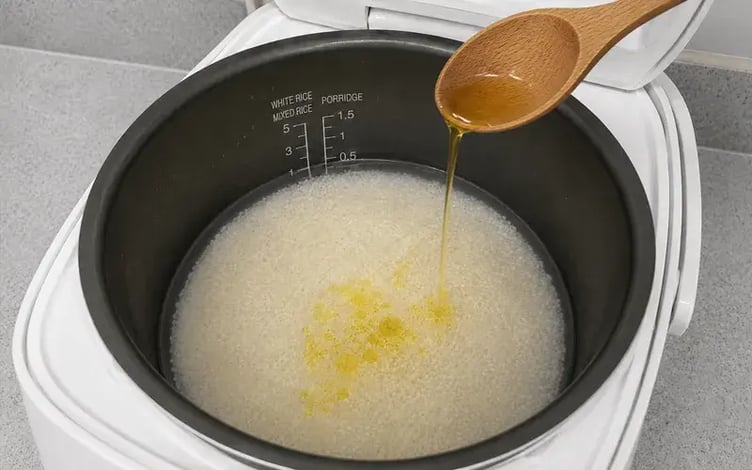
Adding a small amount of oil to the rice and water before cooking can help support better texture during holding, packing, and reheating. The oil should be added before the rice cooker is started, not after the rice has finished cooking.
When added before cooking, rice cooking oil can help reduce sticking, improve grain separation, and create a softer mouthfeel. This can be especially useful when rice will be served later, packed for lunch, or used in prepared meals.
In foodservice settings, rice often needs to remain appealing beyond the first few minutes after cooking. Customers may receive it in a bowl, lunch box, tray, or packaged meal. In these situations, maintaining a consistent texture is important.
Adding rice cooking oil before cooking can help support :
- Better grain separation
- Less clumping
- Softer mouthfeel after holding
- Improved reheated texture
- More consistent quality in packed meals
Rice cooking oil does not replace proper cooking, storage, holding, or food safety practices. However, when added to the rice and water before the cooking cycle begins, it can be one part of a more complete rice-quality system for kitchens dealing with dry, hard, or clumped rice
Key Takeaway
Keeping rice soft for 8+ hours comes down to moisture control, covered holding, proper temperature management, and the right storage or reheating method.
For same-day service, rice should be held warm in a rice cooker, rice warmer, chafing dish, or insulated container. For later use, rice should be cooled, stored in airtight containers, and reheated with steam. For lunch boxes, parties, and prepared meals, reducing air exposure is essential.
Rice becomes dry when it loses moisture. Rice becomes hard when it cools and starch firms up. The best way to keep rice warm and soft is to manage both issues together.
With the right process, rice can stay moist, tender, and enjoyable long after cooking.
FAQ
What is the best way to keep rice warm?
The best way to keep rice warm is to use a rice cooker, commercial rice warmer, chafing dish, or insulated food container. Keep the rice covered, avoid direct dry heat, and open the lid only when needed so the rice does not lose too much steam.
Does rice cooker keep warm mode keep rice soft?
Rice cooker keep warm mode can help keep rice soft for short-term holding, but rice can still dry out if it sits too long or if the lid is opened repeatedly. For better results, let the rice rest after cooking, fluff it gently once, and keep the lid closed.
How long can rice stay in rice cooker?
Rice can stay in a rice cooker on keep warm mode for a limited period, but texture will gradually decline. The rice may become dry, firm, or discolored over time. Always follow the rice cooker manufacturer’s instructions and avoid using it for overnight storage.
How do you store cooked rice?
For cooked rice storage, divide rice into smaller portions, cool it promptly, and place it in airtight containers. Refrigerate or freeze the rice depending on when it will be used. Airtight storage helps reduce moisture loss and keeps the rice from drying out.
What is the best way to reheat rice?
The best way to reheat rice is to add a small amount of water, cover it, and heat it until hot throughout. The added moisture creates steam, which helps soften the grains and restore a better texture.
How do you reheat rice in the microwave?
To reheat rice in the microwave, place it in a microwave-safe container, add a small amount of water, and cover it with a lid or damp paper towel. Heat in short intervals, then fluff before serving.
Why does rice get hard after cooking?
Rice gets hard because it loses moisture and because the starch inside the grains firms up as the rice cools. Air exposure, dry heat, and poor storage can make the problem worse.