

Introduction: If Your Kitchen Results Aren’t Consistent, Oil May Be Part of the Problem
Have you experienced any of the following in your kitchen?
• Fried foods darkening too quickly
• A greasy or heavy finished texture
• Inconsistent flavor between shifts
• Frequent oil replacement
• Excess smoke during service
• Rising frying oil costs
These challenges are often attributed to equipment or cooking technique. However, the type of cooking oil used can have a significant impact on overall kitchen performance.
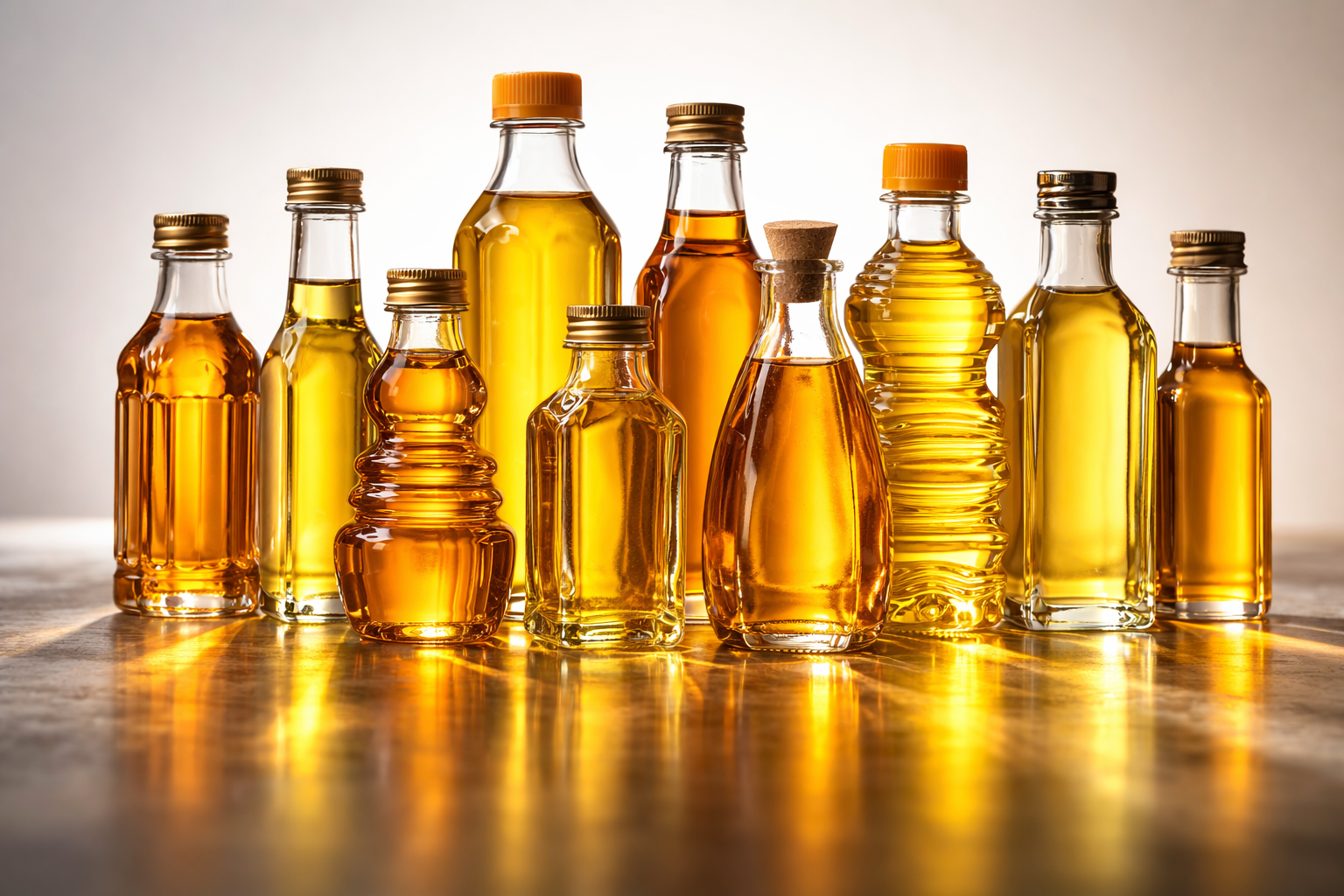
This guide outlines the major types of commercial (foodservice-grade) cooking oils used in restaurants, how they differ, and how to approach oil selection from an operational standpoint.
Understanding Oil Classifications in Foodservice
Retail or consumer oils are packaged and marketed for household use. Commercial (foodservice-grade) oils are supplied in bulk formats and designed specifically for high-volume restaurant environments.
The key difference is not primarily safety. Instead, it lies in packaging format, supply consistency, performance expectations, and procurement alignment. Understanding this distinction helps operators choose oils that match real kitchen demands rather than household assumptions.
Major Types of Commercial Cooking Oil Used in Restaurants
Vegetable Oil (Blended Oils)
Vegetable oil blends are among the most widely used options in foodservice. These products combine multiple plant-based oils to balance cost, stability, and neutral flavor. They are commonly selected as standard frying oils and are suitable for deep frying, sautéing, and general-purpose cooking.
Advantages:
• Cost-effective
• Versatile across applications
• Easy to standardize across locations
Canola Oil
Canola oil is especially common in foodservice in the United States. It provides a relatively high smoke point and a neutral flavor profile, allowing the core ingredients of a dish to stand out. It is frequently used for deep frying, grilling, and sautéing in commercial kitchens.
Advantages:
• Neutral taste
• Suitable for high-heat cooking
• Produces a lighter finished texture
Soybean Oil
Soybean oil is widely available throughout foodservice supply chains and is often used as a base component in oil blends. Its strong supply availability and competitive pricing make it attractive for high-volume operations.
Advantages:
• Reliable large-scale supply
• Cost-efficient for bulk use
• Well integrated into many foodservice systems
Palm Oil and Palm Olein
Palm-based oils are valued for their oxidative stability and strong high-temperature performance. In continuous frying environments, they often maintain structure and color longer than some alternatives.
Advantages:
• Extended fry life
• High heat tolerance
• Reduced oil change frequency
Sunflower Oil
Sunflower oil offers a relatively high smoke point and a mild flavor profile. It is sometimes selected for menus that emphasize a lighter eating experience or health-conscious positioning.
Advantages:
• Minimal flavor interference
• Suitable for various cooking methods
• Supports lighter menu positioning
Olive Oil (Light vs. Extra Virgin)
Extra virgin olive oil is typically reserved for finishing applications due to its strong aroma and distinctive flavor. Lighter olive oil variants are more heat-tolerant and can be used for moderate-temperature cooking.
Advantages:
• Enhances flavor profile
• Supports premium menu positioning
High-Stability Frying Oils
High-stability frying oils are specifically engineered for commercial deep-frying environments. These formulations are designed to improve oxidative resistance, reduce foaming, and work effectively with filtration systems.
Advantages:
• Longer usable fry life
• Lower maintenance burden
• Improved consistency in high-volume frying
Key Factors When Comparing Cooking Oils
When selecting commercial cooking oil, restaurant operators typically evaluate smoke point, flavor neutrality, oxidative stability, cost per use, and equipment compatibility.
Aligning the oil type with actual kitchen conditions improves both food quality and operational predictability.
Choosing Oil by Application

Deep Frying in Restaurants
High-volume frying requires oils with strong oxidative stability and high smoke points.
Sautéing and Grilling
For these applications, operators typically prioritize heat tolerance and neutral flavor.
Salads and Finishing
In finishing applications, flavor becomes the primary decision factor.
Multi-Purpose Oil in Commercial Kitchens
Some operations choose to standardize on a single commercial oil for simplicity. While this can streamline procurement and training, the performance trade-offs should be carefully evaluated.
Why Restaurants Hesitate to Switch Oils
Even when operational issues are present, many restaurants are cautious about changing oils due to staff retraining requirements, procurement approval processes, concerns about flavor changes, and sensitivity to customer feedback.
A critical Operation Choice
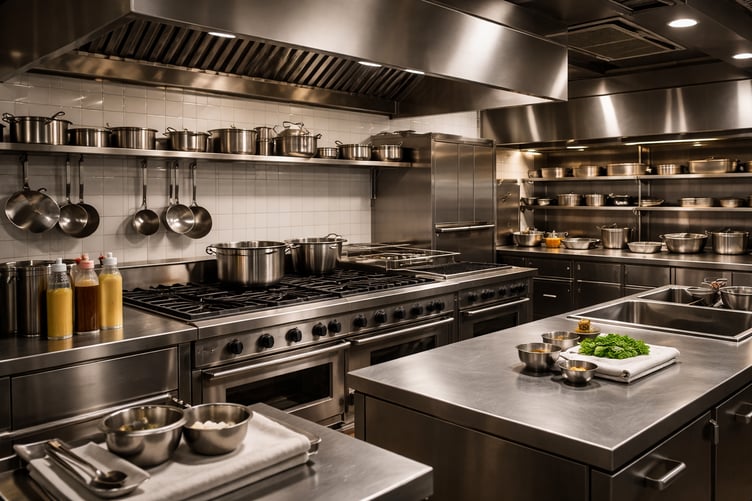
Selecting the right commercial cooking oil is not simply an ingredient decision, it is a critical operational choice that directly impacts kitchen consistency and efficiency.
Issues such as uneven browning, rapid oil degradation, excess smoke, and rising oil costs are often influenced not only by equipment or technique, but also by the oil itself.
Each oil type has distinct strengths. There is no universal “best” oil for every restaurant. The most effective approach is to evaluate options based on smoke point, flavor neutrality, oxidative stability, cost per use, and equipment compatibility, and then align the choice with real kitchen conditions.
In foodservice environments, long-term success depends not only on single-batch results but also on stability under high-volume production, oil change frequency and maintenance burden, and ease of standardization across locations.
Reviewing your current oil strategy against actual kitchen challenges is often the first step toward more predictable and profitable performance.